Ghan-Jeevamrut: The Ultimate Organic Fertilizer Guide
In the world of sustainable agriculture, Ghan-Jeevamrut (the solid version of liquid Jeevamrut) is often called the “elixir of life” for soil. It is a concentrated, microbial-rich manure that acts as a catalyst for soil health, replacing expensive chemical fertilizers with a potent, natural alternative.
Unlike liquid fertilizers that must be used quickly, Ghan-Jeevamrut can be stored for months, making it a favorite for farmers looking for a shelf-stable, easy-to-use organic solution.
Why Do We Need Ghan-Jeevamrut?
Modern farming has heavily relied on synthetic chemicals, which eventually lead to:
-
Soil Hardening: Loss of porosity and structure.
-
Microbial Death: Chemicals kill the beneficial bacteria and fungi that plants need.
-
Acidity/Alkalinity Imbalance: Unbalanced pH levels that lock away nutrients.
Ghan-Jeevamrut fixes this by reintroducing millions of beneficial microorganisms into the soil. It doesn’t just “feed” the plant; it heals the soil so the plant can feed itself naturally.
How to Make Ghan-Jeevamrut: Step-by-Step
The Ingredients (Proportions for 1 Acre)
| Ingredient | Quantity | Purpose |
| Desi Cow Dung | 100 kg | Primary source of microbes and organic matter. |
| Jaggery (Gur) | 1 kg | Food/Energy for microbes to multiply. |
| Pulse Flour (Besan) | 1 kg | Protein source to boost microbial growth. |
| Virgin Soil | Handful | Introduces local, native microorganisms. |
| Desi Cow Urine | 5–10 Liters | Rich in nitrogen and minerals; acts as a catalyst. |
Step-by-Step Process
-
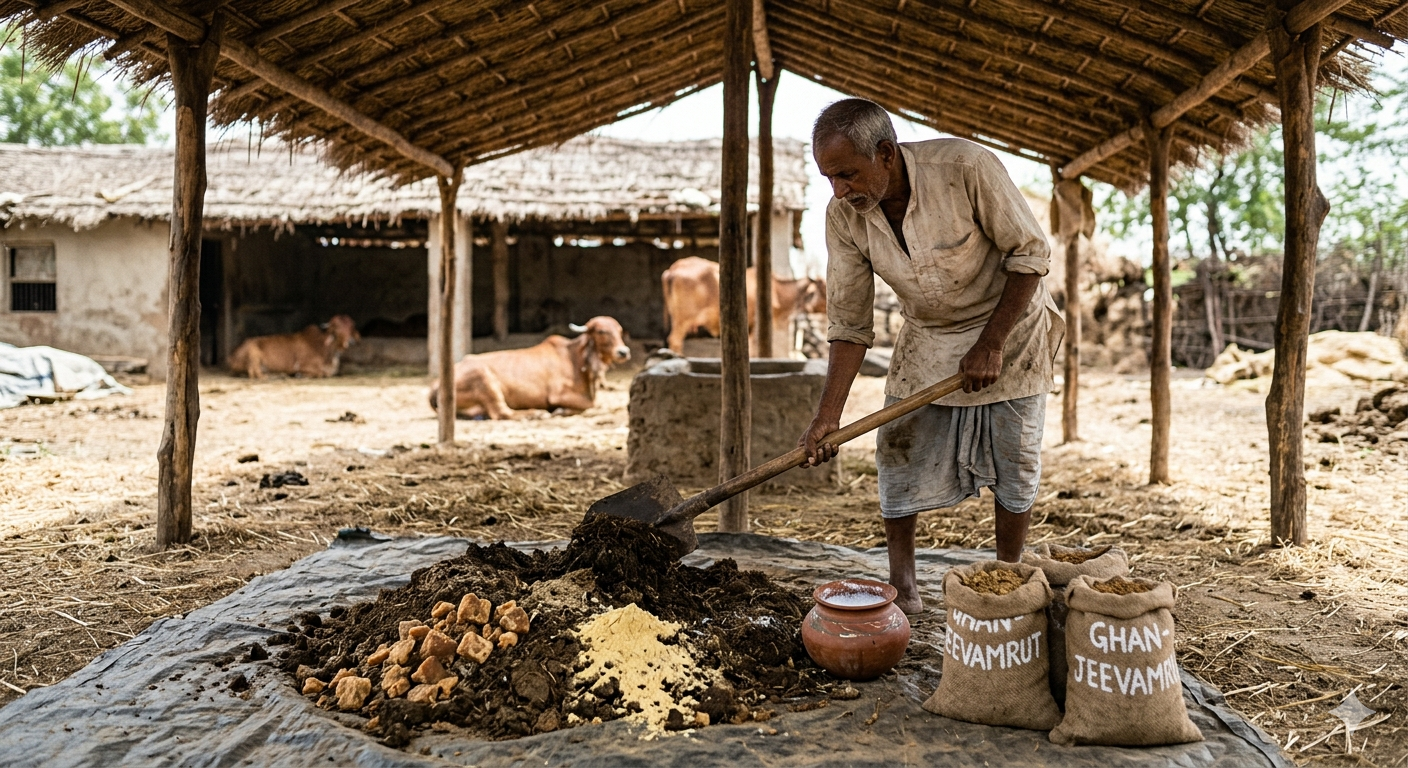
Mixing: Spread the fresh cow dung on a flat surface or in a pit. Add the pulse flour, crushed jaggery, and the handful of virgin soil.
-
Activating: Slowly sprinkle the cow urine over the mixture while mixing it thoroughly with a shovel or wooden stick.
-
Consistency: The mixture should be moist but not runny. It should hold its shape when squeezed.
-
Fermentation: Pile the mixture into a heap and cover it with a gunny bag (jute bag). Let it sit in a shaded area for 48 to 72 hours.
-
Drying: After fermentation, spread the mixture in the shade to dry completely. Avoid direct sunlight, as UV rays can kill the beneficial microbes.
-
Storage: Once dry, crumble the mixture into a fine powder or small granules. Store it in gunny bags in a cool, dry place.
Key Advantages
-
Long Shelf Life: While liquid Jeevamrut lasts about 7 days, Ghan-Jeevamrut can be stored and used for 6 to 8 months.
-
Earthworm Magnet: It creates a perfect environment for native earthworms to return to the topsoil.
-
Improved Soil Texture: It makes the soil more porous, improving water retention and aeration.
-
Sustainable Yields: Farmers often report higher-quality produce (taste and nutrition) and more resilient crops against pests.
-
pH Neutralizer: Helps balance soil that has become too acidic or alkaline due to chemical use.
Average Cost Involved
One of the biggest draws of Ghan-Jeevamrut is its near-zero cost for farmers who own cattle.
-
For Cattle Owners: The cost is virtually $0 (or very minimal for jaggery and pulse flour).
-
Market Price: If you are buying it from organic suppliers, it typically ranges between ₹10 to ₹60 per kg (depending on the region and quality).
-
Input Costs: If buying ingredients, the total cost to treat an entire acre is usually less than ₹200 to ₹500, significantly cheaper than a single bag of chemical urea or DAP.
How to Use It
-
Basal Application: Apply it to the soil during land preparation before sowing.
-
Broadcasting: Sprinkle it near the root zones of growing plants.
-
Reconstitution: You can also mix 1 kg of Ghan-Jeevamrut in 50 liters of water to create a quick liquid fertilizer spray.
Pro Tip: Always apply Ghan-Jeevamrut in the evening or early morning to ensure the microorganisms have the best chance to settle into the soil without heat stress.